
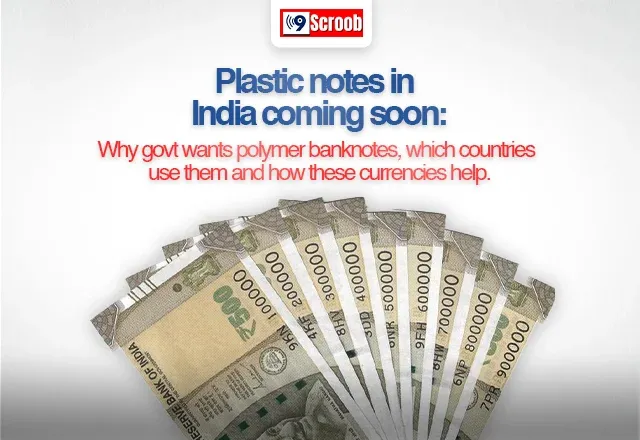
If you’ve ever had a ₹10 note disintegrate in the wash or come out of your pocket looking like it survived a war, you’ll understand why the government is finally taking a serious look at polymer banknotes.
This isn’t a new idea. It was floated back in 2012, went through a small trial, and then quietly disappeared. But it’s back on the table now — and this time it looks like it’s actually moving forward. The Reserve Bank of India has gotten approval to print a billion pieces each of ₹10 and ₹20 notes on polymer for field trials, with wider rollout to follow if things go well. To be clear, though: nobody’s talking about scrapping paper currency. The plan is for polymer notes to circulate alongside the paper ones we already use, not replace them.
What Even Is a Polymer Note?
Forget the mental image of a flimsy plastic bag. Polymer notes are made from something called biaxially oriented polypropylene (BOPP) — a tough, purpose-built plastic film. In your hand, they feel noticeably different from paper: smoother, a bit stiffer, almost slick. It takes a few uses to get used to, but people who’ve handled them in other countries say the adjustment happens fast.
Why Bother Switching?
There isn’t one single reason driving this — it’s really a handful of practical upsides stacking together.
They simply last longer. Small notes like the ₹10 and ₹20 change hands constantly and wear out fast as a result. Polymer versions can stick around anywhere from two to six times longer than their paper equivalents, which means the RBI has to print, transport, and eventually destroy far fewer notes over time.
Counterfeiting gets harder. Interestingly, when this idea was first raised back in 2012, the government said the real goal was durability, not fraud prevention. But polymer notes do come with a side benefit here — they can carry security features that are genuinely difficult to fake, like transparent windows built right into the note, holograms, colour-shifting ink, raised print, and microtext.
They stay cleaner. Paper soaks up sweat, dust, and grime, which is why old notes always feel a bit grubby. Polymer resists moisture and just stays visibly cleaner for longer.
The economics work out over time. Polymer notes cost more to produce upfront than paper ones. But because they don’t need replacing as often, the total cost of keeping cash in circulation tends to fall over the years. The RBI’s own printing costs actually dropped nearly 24% in FY26, partly thanks to lower printing requirements — even as the total value of currency in circulation kept climbing, hitting over ₹41 lakh crore by March 2026, with ₹500 notes making up the bulk of it.
There’s an environmental angle too. A 2016 IMF study that compared the full lifecycle of paper versus polymer notes — from raw material sourcing to final disposal — found polymer came out ahead across the board, cutting energy demand and warming impact by roughly 30% compared to paper. Polymer notes are also lighter, so transporting and distributing them takes less energy. And when they finally do wear out, they don’t just get shredded and landfilled — many countries recycle the material into everyday plastic products, park benches being the classic example.
Who’s Already Doing This
India would be joining a fairly large club. Somewhere around 60 countries have adopted polymer currency in some form by now.
Australia got there first, issuing the world’s first polymer note back in 1988, and today its entire banknote series is polymer. Canada started transitioning in 2011, partly after studying the environmental footprint of paper versus plastic notes. The UK has moved its £5, £10, £20, and £50 notes over, and New Zealand’s polymer notes have held up well under everyday wear. Closer to home, Thailand, Vietnam, Malaysia, and Singapore all use polymer notes too, though not necessarily across every denomination.
Paper vs. Polymer, Quickly
| Paper Notes | Polymer Notes | |
| Material | Cotton-based paper | Polypropylene plastic |
| Lifespan | Shorter | 2–6x longer |
| Water resistance | Poor | Strong |
| Durability | Tears easily | Much sturdier |
| Security features | Standard | Advanced |
| Long-term cost | Higher | Lower |
What’s the Catch?
Nothing’s free here. Polymer notes cost more per unit to manufacture. ATMs, note-counting machines, and vending machines may need hardware or software updates to handle them properly. And there’s a short learning curve for the public, since polymer notes fold, stack, and feel different from what people are used to — though experience elsewhere suggests that’s a minor speed bump, not a real obstacle.
Will Every Denomination Switch?
Not right away, and maybe not ever entirely. The current plan starts small: trial the ₹10 and ₹20 notes, see how they perform in the real world, and only then consider expanding to other denominations or a nationwide rollout. That’s basically the same cautious, step-by-step approach every other country has taken.
The Bottom Line
Even with UPI and digital payments exploding, physical cash still moves an enormous amount of everyday commerce in India. Polymer notes won’t change that fact — but they could make the cash people already carry more durable, harder to fake, and cheaper for the RBI to keep circulating. There’s no confirmed date for a full rollout yet, but if the trials go the way officials expect, plastic currency could become a normal part of Indian wallets within the next few years.