
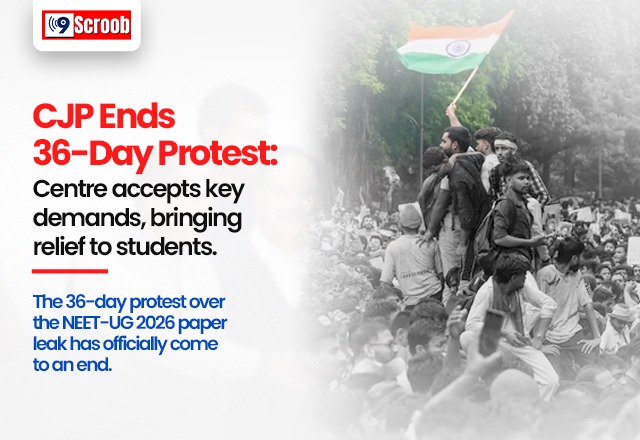
New Delhi, July 27: It’s over — more than a month after it began, the nationwide protest led by the Cockroach Janta Party (CJP) has finally wound down, with the Central government agreeing to several of the protesters’ core demands. For thousands of students and their families who’d been watching anxiously, the news came as a huge relief.
The unrest started 36 days ago over allegations of a paper leak in NEET-UG 2026. What began as frustration over exam irregularities quickly snowballed into something bigger — a full-blown movement calling for transparency and real reform in how India runs its education system.
Students across the country turned out for marches and sit-ins, running awareness campaigns wherever they could. Things picked up even more momentum once environmental activist Sonam Wangchuk joined in with a hunger strike backing the students’ cause.
The government blinks
After weeks of back-and-forth with protest leaders, the Centre finally agreed to act — promising tighter safeguards against future paper leaks, more transparency around how competitive exams are run, compensation for families hit by exam-related issues, and a guarantee that peaceful protesters wouldn’t face any legal consequences.
Perhaps the clearest sign that the government was taking things seriously: Dharmendra Pradhan stepped down as Union Education Minister. For many students, his resignation felt like proof that their voices had actually been heard.
Enter Prahlad Joshi
Taking over from Pradhan is senior BJP leader Prahlad Joshi, who’s now settling into the role of Union Education Minister.
Joshi didn’t waste time addressing the moment — he said he was taking on the job with humility and promised students, parents, and teachers that rebuilding trust in the system would be right at the top of his agenda.
Expect his early moves to focus on tightening security around national entrance exams and cracking down on the loopholes that make leaks possible in the first place. There’s also word that broader education reforms are in the pipeline for the months ahead.
For the millions of students gearing up for competitive exams, Joshi’s arrival feels like the start of something new — though the pressure is on for those promises to actually show up in practice.
Celebrations break out
Once the announcement came through, CJP leaders called on protesters everywhere to wind things down peacefully and head home. And they did — cities across India saw students embracing each other, waving flags, and handing out sweets in celebration. For a lot of them, it wasn’t just about the outcome — it was proof that peaceful protest still works.
Even so, CJP leaders were quick to add that this isn’t the end of the road. The protest may be over, but they say they’ll keep pushing for a fairer exam system through dialogue and continued public pressure.
Wangchuk breaks his fast
Sonam Wangchuk, whose hunger strike became one of the movement’s most talked-about moments, also called off his fast once the government’s decision was announced. His involvement did a lot to keep the story in the national spotlight and rally public support behind the students.
So what now?
With the protests behind them, all eyes are on what the government does next. Students and parents will be watching closely to see how fast Joshi and his ministry move on the reforms they’ve promised — tighter exam security, fewer leaks, and a system people can actually trust again.
The end of the CJP protest is a significant chapter in India’s education story, but as many are quick to point out, the real work is just getting started. Promises are easy to make — the challenge now is turning them into an exam system that’s genuinely fair and reliable for the students who come next.