
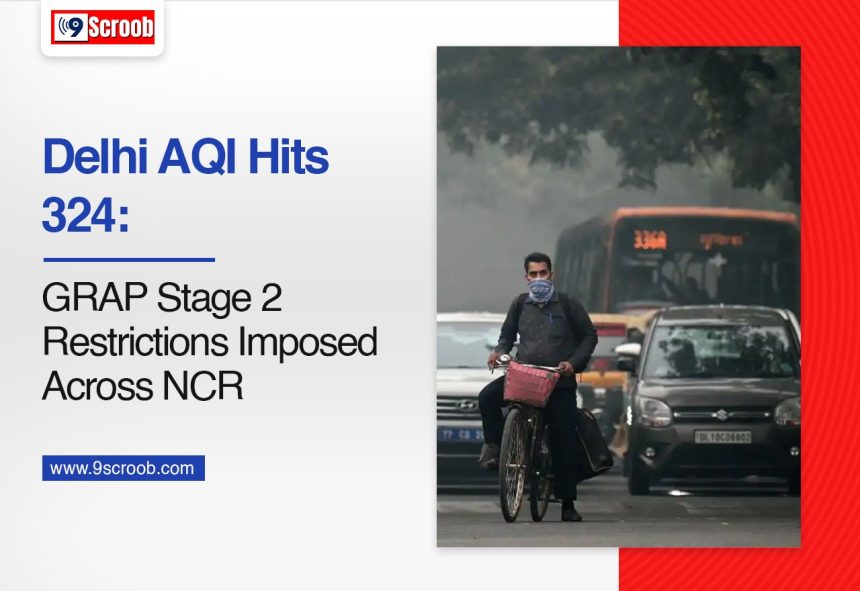
If the air feels heavier than it did last week, it isn’t just you. Delhi’s air quality slipped into the ‘Very Poor’ category for the first time this season, and this is the Delhi pollution news 2026 residents were dreading. On Monday, November 2, 2026, the city’s average Air Quality Index (AQI) reached 324 at 4 PM. That’s Delhi’s highest pollution level in nine months.
The jump has left many people worried, especially because winter is only getting started and pollution is expected to stay high for the next few days.
In response, the Commission for Air Quality Management (CAQM) activated Stage 2 of the Graded Response Action Plan (GRAP) across Delhi-NCR with immediate effect. That means a fresh set of rules is now in play: higher parking charges, more public transport, more road cleaning, and curbs on certain polluting activities.
Delhi AQI Reaches 324: What Do the Latest Numbers Show?
Delhi’s air quality went downhill in just a few days. According to CPCB data, the city’s AQI was 117 on October 31, which is Moderate. It climbed to 261 on November 1, and then reached 324 on November 2. That Delhi AQI of 324 is the highest since February 4, 2026, when the AQI stood at 339. Some neighbourhoods had it much worse. On Monday, three monitoring stations reported Severe air quality:
- Jahangirpuri: AQI 436
- Rohini: AQI 415
- Punjabi Bagh: AQI 413
Across the 58 monitoring stations with available data, 37 recorded Very Poor air quality, while 17 stayed in the Poor category. If you’re checking Delhi AQI today, here’s the latest: on Tuesday morning, November 3, the AQI climbed further to 331 at around 7 AM, according to CPCB data. Not sure what the numbers mean? Here’s how CPCB classifies air quality:
| AQI Range | Air Quality |
|---|---|
| 0–50 | Good |
| 51–100 | Satisfactory |
| 101–200 | Moderate |
| 201–300 | Poor |
| 301–400 | Very Poor |
| 401–500 | Severe |
Why Is Delhi’s Air Pollution Increasing?
So why now? The sudden rise comes from unfavourable weather combined with several pollution sources, and together they make Delhi NCR air pollution much worse. So, here’s the situation:
- Weather and low wind speeds
Delhi has harsh winter weather. The winds are low; the pollutions do not scatter and flow up above the soil. The longer that goes on, the dirtier the air gets.
- Stubble Burning
Farmers in neighbouring states, including Punjab and Haryana, burn crop residue at this time of year. The smoke can travel towards Delhi and add more harmful particles to the air.
- Car emissions
It’s so much worse with daily traffic. Trucks, buses, cars, and more all give off pollution. According to the Decision Support System, transport emissions made up around 19.2% of Delhi’s pollution load on November 2.
- Construction and Industrial Activities
Construction dust, industrial emissions, road dust, and waste burning add to the load too. They hurt even more when the weather won’t let the pollutants disperse.
GRAP Stage 2 Implemented in Delhi-NCR: Check the New Restrictions
Once Delhi’s AQI crossed 300 and entered the Very Poor category, CAQM put GRAP Stage 2 Delhi measures into effect across the entire NCR.
The aim is to cut pollution from vehicles, dust,t and other sources. Here’s what to expect:
- Higher parking charges: Parking fees will go up to discourage people from using private vehicles.
- More public transport: Authorities will strengthen bus and metro services to encourage commuters to switch.
- Staggered office timings: Government offices and municipal bodies may follow staggered working hours to ease traffic congestion.
- Mechanical road sweeping: Road cleaning will be stepped up, especially on busy roads and traffic corridors.
- Water sprinkling: Authorities will increase water sprinkling and use dust suppressants to keep road dust from rising into the air.
- Diesel generator restrictions: Restrictions on diesel generator sets will be enforced, subject to permitted exemptions.
- Electric heaters for security staff: RWAs and commercial establishments must provide electric heaters to security personnel so they don’t resort to open burning.
On the commuting front, Delhi Metro has announced 20 additional weekday trips from November 3. That takes the total number of additional daily trips to 40.
Delhi Air Quality Forecast: Will Pollution Improve?
Unfortunately, don’t expect quick relief. According to the Air Quality Early Warning System for Delhi, the city’s AQI is likely to stay in the Very Poor category from November 3 to November 5.
After that, a marginal improvement is expected over the following six days, with Delhi air quality likely to move towards the Poor category. Still, how things actually play out will depend on wind speed, the weather, and pollution levels in neighbouring regions.
How Can Delhi Residents Protect Themselves?
With a very poor AQI in the capital, a few simple precautions can help you breathe a little easier:
- Wear a well-fitted N95 mask when travelling outdoors.
- Skip outdoor workouts, jogging, and cycling when pollution is high.
- Keep windows and doors closed when the air outside is poor.
- If you have an air purifier, use it indoors.
- Steer clear of pointless outdoor activities, especially in close proximity to busy roads.
- Extra caution should be given to children, the elderly, and those with heart or respiratory issues.
- If you have chest pain, breathing problems, or persistent coughing, see a doctor.