

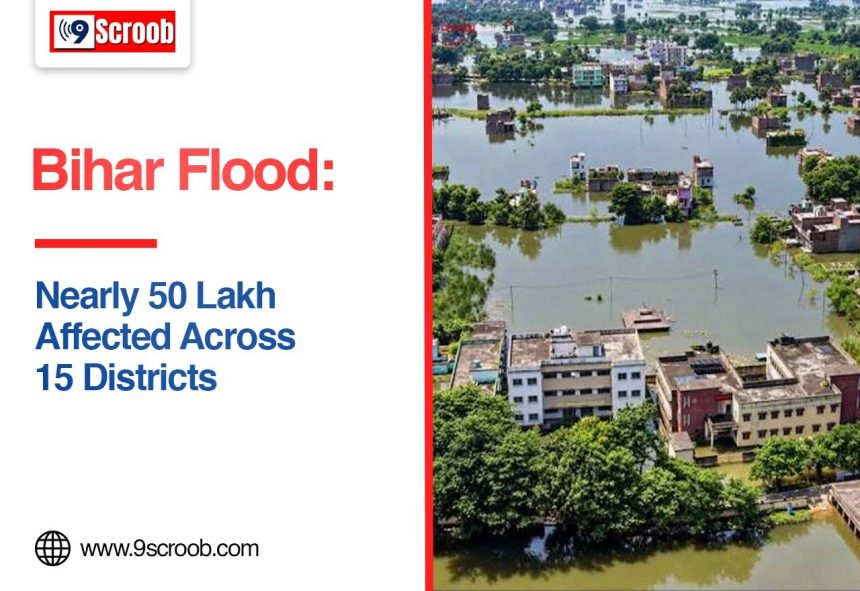
Bihar’s flood situation remained critical on September 17, with nearly 50 lakh people across 15 districts affected by rising water levels and widespread inundation. Authorities said another spell of rainfall in the coming days could further complicate relief efforts in the affected areas.
What’s Happening Across the State
According to the Bihar Disaster Management Department, the Bihar flood situation today spans 15 districts – Patna, Bhojpur, Saran, Vaishali, Bhagalpur, Begusarai, Buxar, Samastipur, Munger, Katihar, Lakhisarai, Khagaria, Purnea, Madhepura, and Araria.
Heavy rainfall has pushed several rivers above their danger marks, leaving many low-lying areas flooded. The Ganga has been a major concern, particularly around Patna. Water levels at Gandhi Ghat crossed the previous record set in 2016, adding to concerns in areas along the river.
Nearly 50 Lakh People Affected
The figure of nearly 50 lakh affected people gives an idea of how widespread the flooding has become. Homes, roads and farmland have been affected, while some families are relying on boats to move around or reach safer locations. The state has deployed close to 1,800 boats and set up more than 1,000 community kitchens to provide food to people in affected areas.
Thirteen relief camps are also operating. Financial assistance is another part of the relief effort. More than 8.27 lakh flood-affected families have reportedly received ₹7,000 each from the government.
Which Districts Are Affected by the Bihar Flood?
The affected districts include Patna, Bhojpur, Saran, Vaishali, Bhagalpur, Begusarai, Buxar, Samastipur, Munger, Katihar, Lakhisarai, Khagaria, Purnea, Madhepura and Araria. The impact is not identical everywhere. Some areas are dealing with submerged roads and agricultural land, while others are facing rising river levels and the risk of further flooding. With several rivers still above danger levels, authorities are continuing to monitor vulnerable locations and embankments.
Rescue and Relief Operations Continue
Rescue teams from the NDRF and SDRF continue to work in flood-affected areas. Their efforts include evacuating residents from vulnerable locations and helping authorities deliver essential supplies.
Food, drinking water, medicines, dry rations, and temporary shelter remain among the main priorities. Boats are also being used to help people travel through areas where roads have become difficult or impossible to use. Officials are keeping a close watch on embankments and river levels as the flood situation develops.
Centre Begins Damage Assessment
Union Agriculture Minister Shivraj Singh Chouhan visited flood-affected areas to assess the damage and review the situation on the ground. Initial estimates have put the potential damage at around ₹10,000 crore. However, the final figure is expected to take time because officials need to assess damage to crops, homes, roads, and other infrastructure after floodwaters recede. The assessment will help provide a clearer picture of the overall impact of the flooding.
More Rain Could Worsen the Flood Situation
Another major concern is the weather. The India Meteorological Department (IMD) has forecast rain and thunderstorms in parts of the region. More rainfall could increase water levels in already swollen rivers and make rescue and relief operations more challenging.
People living in low-lying and flood-prone areas are therefore being advised to follow official weather and administration updates. For residents, the coming days will be important as authorities continue monitoring rainfall and river levels.
What’s Next for Bihar After the Floods?
For now, the focus remains on rescue, relief and monitoring river levels. Authorities are continuing to provide food and essential supplies while moving vulnerable residents to safer locations where necessary. A complete assessment of crop, property and infrastructure damage will take time, particularly while some areas remain underwater.
The next few days will depend heavily on rainfall and how quickly river levels begin to fall. Until then, continued relief work and regular updates from local authorities will remain important for communities affected by the Bihar floods.