

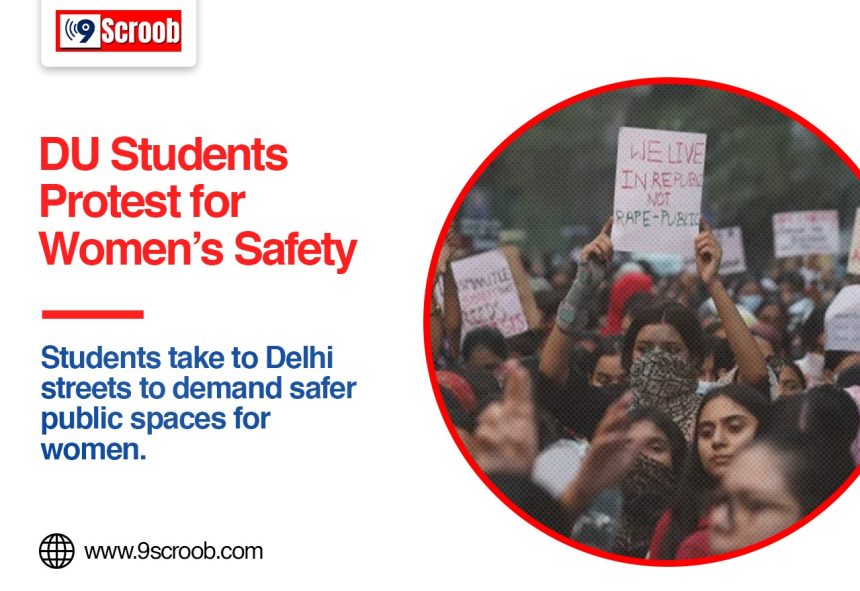
New Delhi: For hundreds of Delhi University students, September 23 wasn’t a regular Wednesday. Masks on, posters in hand, they poured onto the streets near Lady Shri Ram College (LSR), angry, anxious, and determined to be heard after the alleged sexual assault of a 17-year-old girl at Aastha Kunj Park just days earlier.
The timing wasn’t a coincidence. The march came two days after the alleged incident at Aastha Kunj Park, and just a day after one of the accused was arrested following a police encounter barely a stone’s throw from LSR’s back gate.
Hundreds Show Up, Voices Get Louder
What started as a gathering of a couple of hundred students near LSR’s back gate soon swelled; some estimates put the crowd at 400 to 500 people as the march went on. Students didn’t just come from LSR; they showed up from Gargi College, Miranda House, and Dr BR Ambedkar University too, standing shoulder to shoulder in a rare show of solidarity across campuses.
The placards told their own story. “Raaton pe bhi haq hai hamara” (We have a right to the night too) and “Women hold up half the sky” were among the messages held high, while chants of “Azaadi” echoed through the streets, a now-familiar rallying cry for freedom and safety alike.
It’s Not Just About One Incident
Talk to the students, and it’s clear this protest was about more than just one horrifying event. Many said the area around the back gate has long had a reputation for stalking, for harassment, for the kind of unease that builds up over months and years of feeling unsafe.
Poor lighting after dark. CCTV cameras that may or may not be working. Barely-there police presence. These weren’t new complaints, but Aastha Kunj gave them new urgency.
A Police Encounter Right at Their Doorstep
Adding to the unease was something that hit uncomfortably close to home, literally. On September 22, accused Asif was arrested after allegedly opening fire on police officers trying to apprehend him near Amar Colony. He was injured in the exchange and taken into custody.
The location of that encounter? Just about 50 metres from LSR’s back gate. For students and faculty already on edge, that proximity turned fear into something much more immediate. The college responded by pausing physical classes and moving lessons online for a few days.
What Students Are Asking For
This wasn’t a protest without a plan. Students came with a clear list of demands:
- Better street lighting around campus and nearby lanes
- CCTV cameras that actually work
- More visible police patrolling
- Tighter security specifically near the back gate
- Real follow-up on stalking and harassment complaints
- Safer routes for getting around after dark
- Better coordination between college authorities and local police
Encouragingly, police officials reportedly sat down with students and college representatives afterward, promising more boots on the ground and stronger security measures in the area.
Back to Class, But Not Back to Normal
LSR resumed offline classes on September 24, a day after the protest. The administration reassured students that faculty mentors and counsellors would be on hand for anyone still processing the events of the past week, even as conversations with police about long-term security continued behind the scenes. The college has also pushed for increased patrolling in the lanes around its back gate and nearby parks.
Safety Doesn’t End at the College Gate
Perhaps the most powerful part of the protest was this idea: safety can’t just mean a secure campus. Students spoke about the metro stations they walk to, the roads they cross, the parks they pass, all the in-between spaces that make up their daily commute and daily lives. Their point was simple. Feeling safe shouldn’t stop the moment they step outside college walls.
Looking Ahead
The protest has reignited a broader conversation about women’s safety around DU campuses and the public spaces surrounding them- lighting, surveillance, patrolling, all of it back under the microscope. Meanwhile, the Aastha Kunj investigation itself continues. All three accused remain in judicial custody, and the case is still making its way through the legal process; nothing has been proven in court yet. But for the students who marched that day, the message was refreshingly uncomplicated: they just want to be able to walk home safely, day or night.