
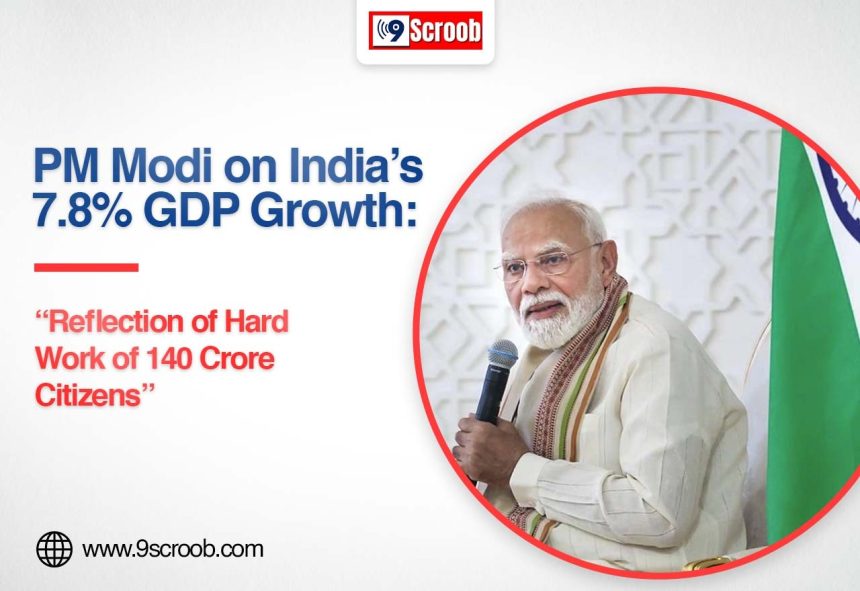
New Delhi, September 1, 2026: India has just reported a 7.8% GDP growth rate, and Prime Minister Narendra Modi was quick to give credit where he feels it is due, to the country’s 140 crore citizens. In his reaction to the numbers, the PM described the growth as proof of the everyday hard work and collective grit of ordinary Indians.
The timing makes the figure even more notable. Economies around the world are still grappling with geopolitical friction, unpredictable trade policies, and volatile energy prices, so a growth print this strong gives the government plenty to point to. Modi was quick to note that this isn’t a story about government policy alone. He credited people, businesses, workers, and entrepreneurs across the country for keeping the economic engine running.
India Records 7.8% Growth in First Quarter
The Indian economy expanded by 7.8% in the April-June quarter of FY 2026-27, according to fresh government data, comfortably beating the Reserve Bank of India’s earlier projection of 7%.
Manufacturing, services, consumption, and investment all pulled their weight in driving this performance, giving the numbers a broad-based feel rather than a boost from just one sector. For a government looking for good news on the economic front, this print delivers exactly that — a signal that India’s growth engine is still firing on most cylinders.
PM Modi Says Growth Belongs to the People
Responding to the data, PM Modi framed the 7.8% figure as a reflection of the hard work and shared resolve of 140 crore Indians, not a number to be claimed solely as a policy win. That framing was deliberate. Instead of taking a victory lap for the administration, the Prime Minister shone the spotlight on citizens and businesses who show up and contribute to economic activity every single day.
Small business owners, farmers, factory workers, professionals, and young entrepreneurs all found a mention, a nod to how varied India’s growth engine really is. The underlying message was simple: India’s economic story is written by its people, not just its policymakers.
Why 7.8% Growth Is Important
A 7.8% growth rate would be impressive in any environment, but it stands out even more given what’s happening globally right now. Ongoing conflicts, shifting trade arrangements, elevated energy costs, and lingering supply-chain disruptions are weighing on economies worldwide, making India’s number look like an outlier in a good way.
Much of the credit goes to strong domestic demand. Consumer spending and investment activity have held up well, while manufacturing and services continue to carry a large share of the load. That said, economists are quick to add a note of caution: hitting a strong number for one quarter is one thing; sustaining that momentum across several quarters is the real test.
Modi’s Push for ‘Vocal for Local’
Alongside celebrating the GDP numbers, PM Modi used the moment to renew his call for Indians to back homegrown products and local businesses. This isn’t a new theme for him — the Prime Minister has long championed the ideas of Vocal for Local and Swadeshi, urging consumers to pick Indian-made goods whenever they have the choice.
He’s also nudged people toward choosing India for travel and celebrations, rather than defaulting to destinations abroad. The logic behind the push is straightforward: when domestic demand strengthens, Indian businesses grow, and that growth opens up more opportunities within the country itself.
What Does the Growth Mean for Ordinary Indians?
Headlines about GDP growth tend to live in the world of percentages and forecasts — but the real test is whether that growth actually shows up in people’s daily lives. When the economy expands, it typically fuels more investment, business expansion, and hiring. It can also lift demand for goods and services across the board.
But a strong GDP number doesn’t automatically translate into people feeling richer overnight. Job availability, wage growth, inflation, and the cost of living all play a role in how growth is actually experienced on the ground. That’s exactly why the next few quarters will matter so much — they’ll show whether this growth trickles down or stays confined to the headline number.
Challenges Still Remain
Even with the positive print, India isn’t out of the woods on the economic risk front. Oil prices remain a key pressure point, given how much crude India imports. Any spike there can push up transportation and production costs, which in turn puts pressure on inflation.
Add to that the uncertainty around global trade and geopolitics, both of which could weigh on exports and investment flows in the months ahead. On the home front, policymakers will need to walk a fine line, keeping inflation in check while still encouraging private investment and job creation.
India’s Growth Story Continues
The 7.8% GDP figure gives FY27 a strong start and backs up the government’s broader argument that India’s economy remains resilient even as global conditions stay shaky. True to form, PM Modi’s response leaned into the human side of the story, crediting the growth to the collective effort of the country’s citizens rather than policy alone. The question that really matters now is whether India can keep this momentum going in the quarters ahead.
For the moment, though, the government’s message is upbeat: the economy is growing at a healthy clip, and the next job is making sure that growth turns into real jobs, stronger businesses, and wider opportunities for people across the country.