
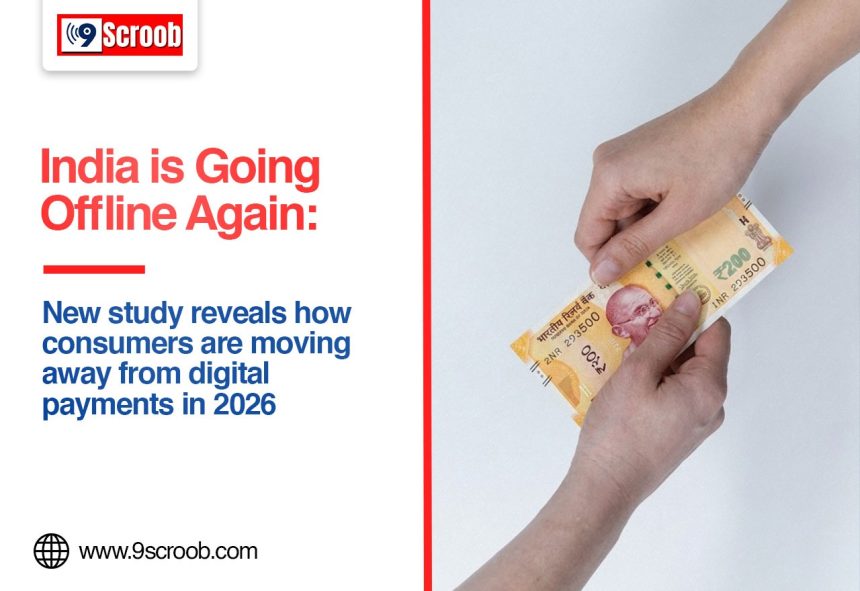
India’s middle-class consumers are showing a more balanced approach towards online and offline transactions in 2026. While digital payments continue to remain popular in several categories, a new study indicates that consumers are increasingly choosing physical channels for some routine payments and purchases.
- Bill Payments See the Biggest Shift Towards Offline
- Retail Payments Are Almost Evenly Split
- Food and Travel Transactions Shift Towards Physical Channels
- Groceries and Medicines Remain Strongly Offline
- Are Indians Really Moving Away From Digital Payments?
- Why Consumer Payment Preferences Are Changing
- What Does the Study Mean for India’s Digital Economy?
- India Digital Payment Trends 2026: Key Takeaway
The findings of The Great Indian Wallet 4.0 2026 study by Home Credit India show that digital adoption is not following the same trend across every category. Bill payments have witnessed the most notable shift towards offline channels, while food transactions and travel bookings have also recorded stronger offline preferences.
At the same time, digital platforms continue to remain important for retail payments and loan-related transactions.
The study surveyed individuals aged 18 to 55 years, with an average monthly income of ₹35,000.
Bill Payments See the Biggest Shift Towards Offline
Bill payments recorded the most significant change among the categories covered in the study. The proportion of respondents preferring offline bill payments increased to 59% in 2026, compared with 43% in 2025.
In contrast, the preference for online bill payments declined from 54% in 2025 to 39% in 2026.
The findings indicate that consumers who previously relied heavily on digital platforms for utility and other regular bill payments may now be increasingly comfortable using physical payment channels.
Changes in household spending patterns, pricing and day-to-day routines could be among the factors influencing these preferences.
Retail Payments Are Almost Evenly Split
Unlike bill payments, retail transactions have not shown a clear shift towards either online or offline channels.
In 2026, 49% of respondents preferred offline retail payments, while an equal 49% preferred online payments. In 2025, offline preference stood at 46%, compared with 51% for online payments.
This suggests that retail payments have entered a hybrid phase, where consumers are using both digital and physical payment methods depending on the situation.
Loan-taking, meanwhile, continues to show a slight preference for digital channels. The proportion of respondents preferring online channels for taking loans increased from 50% in 2025 to 51% in 2026.
Food and Travel Transactions Shift Towards Physical Channels
The preference for offline transactions has also increased in some everyday categories beyond bill payments.
Food transactions recorded a notable change, with the preference for dine-in and takeaway transactions increasing to 73% in 2026, compared with 59% in 2025.
Travel bookings also saw a considerable shift. The preference for offline bus and train ticket bookings increased to 72% from 58% in the previous year. At the same time, online preference declined from 29% to 21%.
These changes suggest that consumers may still prefer physical interactions for certain services, particularly where convenience, personal assistance or familiarity plays an important role.
Groceries and Medicines Remain Strongly Offline
Groceries and medicines continue to be categories where offline shopping remains dominant.
According to the study, 82% of respondents preferred offline channels for both groceries and medicines in 2026. However, this was slightly lower than the 85% preference recorded for both categories in 2025.
Despite the modest decline, physical stores continue to play a major role in these everyday purchases.
Are Indians Really Moving Away From Digital Payments?
The findings do not indicate that Indian consumers are completely abandoning digital payments. Instead, the data points towards a more selective approach to digital transactions.
Consumers continue to use online channels where they offer clear benefits, while offline options remain attractive for certain everyday activities.
For example, retail payments are almost evenly divided between online and offline methods, while online loan-taking has continued to grow. On the other hand, bill payments, food transactions and travel bookings have witnessed stronger offline preferences.
Why Consumer Payment Preferences Are Changing
The changing preferences could reflect several factors, including convenience, familiarity, personal interaction and the nature of the transaction.
Digital payments offer speed and convenience, but physical channels can still be preferred when consumers want assistance, have established offline habits or find in-person transactions easier for particular services.
This suggests that India’s digital payment journey is becoming more diverse rather than simply moving from offline to online.
What Does the Study Mean for India’s Digital Economy?
The latest findings suggest that the growth of digital payments does not necessarily mean that offline channels will disappear.
Instead, consumers appear to be choosing between digital and physical channels based on the type of transaction. This creates a hybrid payment environment, where both online and offline methods continue to have an important role.
For businesses, this means offering customers multiple payment and service options could remain important, particularly in categories where consumer preferences are divided.
India Digital Payment Trends 2026: Key Takeaway
India’s payment landscape in 2026 appears to be moving towards a more balanced model. Consumers are not rejecting digital payments altogether, but they are also not automatically choosing online channels for every transaction.
Bill payments, food transactions and travel bookings have seen notable increases in offline preferences, while retail payments remain almost evenly split and online loan-taking continues to gain ground.
The broader takeaway is that India’s digital adoption may not be a straight-line transition from offline to online. Instead, consumers are increasingly selecting the channel that they find most convenient and suitable for each individual transaction.
Disclaimer: This content is intended for informational and educational purposes only.