

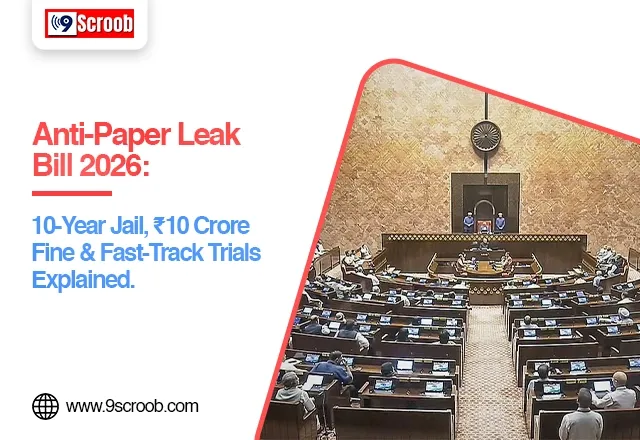
The Lok Sabha has passed the Anti-Paper Leak Amendment Bill by voice vote, proposing stricter punishment for those involved in question paper leaks and other examination-related malpractices. The bill seeks to strengthen the Public Examinations (Prevention of Unfair Means) Act and make the legal framework more stringent against offences that affect the fairness of public examinations.
Under the proposed changes, individuals found guilty of serious offences related to paper leaks could face imprisonment of up to 10 years along with a fine of up to Rs 50 lakh.
Anti-Paper Leak Bill Introduced in Lok Sabha
The legislation was introduced in the Lok Sabha on July 27 by Union Minister Jitendra Singh. The amendment comes amid continued concerns over paper leaks and examination irregularities, particularly following the controversy surrounding the NEET examination.
The government had tabled the amendment bill in Parliament with the aim of further strengthening the existing anti-paper leak law.
Tougher Punishment for Paper Leak Offences
One of the key provisions of the amendment is the proposal for stricter punishment for individuals involved in leaking question papers or using other unfair means during public examinations.
The bill proposes:
- Imprisonment of up to 10 years for serious offences
- A financial penalty of up to Rs 50 lakh
- Stronger legal action against those involved in examination malpractices
The proposed changes are aimed at creating a stronger deterrent against organised paper leak networks and other activities that compromise the integrity of public examinations.
Government Says Action Was Taken After NEET Controversy
Replying to the discussion in the Lok Sabha, Union Minister Jitendra Singh said that the government acted promptly after concerns regarding the NEET paper leak surfaced.
According to the minister, as many as 52 FIRs have been registered since the anti-paper leak law came into force in 2024. He said the proposed amendment reflects the government’s willingness to further improve the law based on the experience gained from its implementation.
Opposition Continues to Raise Paper Leak Issue
The opposition has repeatedly raised the issue of alleged paper leaks and examination irregularities since the Monsoon Session of Parliament began. The issue led to protests and disruptions in the Lok Sabha, affecting legislative proceedings.
During the debate, Jitendra Singh also criticised Leader of Opposition Rahul Gandhi over his remarks and comments related to parliamentary procedures.
Following the passage of the amendment bill by voice vote, Lok Sabha Speaker Om Birla adjourned the House for the day.
What Does the Anti-Paper Leak Amendment Bill Aim to Do?
The main objective of the legislation is to tighten the legal framework for dealing with examination-related offences. It seeks to impose stronger penalties on those found guilty of leaking question papers or engaging in other unfair practices during public examinations.
With tougher jail terms and higher financial penalties, the government aims to strengthen action against individuals and organised groups involved in compromising the examination system.