

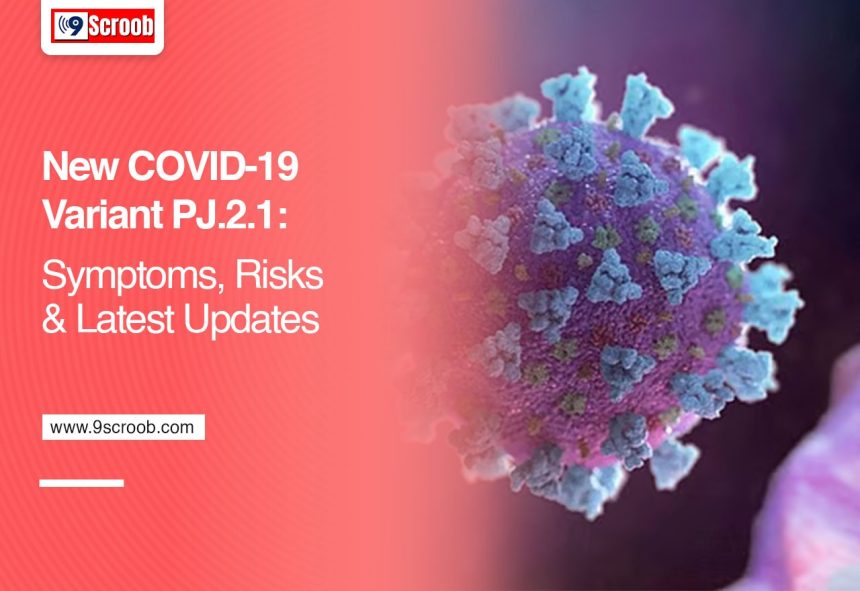
A new COVID-19 strain is getting a lot of attention lately. The PJ.2.1 variant was first spotted in Ontario, Canada, in May 2026, and it has since turned up in parts of North America, Europe, Asia, and Oceania. Here’s a plain look at what researchers know so far, and what they don’t.
What Is the PJ.2.1 Variant?
The PJ.2.1 variant is a new lineage of SARS-CoV-2, the virus that causes COVID-19. Researchers call it a saltation variant, meaning it acquired a large number of genetic changes in one go.
A study in the Journal of Infection in October 2026 traced it to MC.10.1.7, a descendant of the JN.1 lineage. The first known sample was collected in Ontario on May 2, 2026. Since then, it has been found in other Canadian provinces, the United States, Singapore, Australia, New Zealand, Israel, France, and Spain.
Public Health Ontario’s report from November 2, 2026, showed that it made up 25.2% of sequenced samples between September 20 and October 17, up from 16.9% in the four weeks before. One thing to remember: these numbers count only sequenced samples, not every COVID-19 infection.
Why Is the PJ.2.1 Variant Spreading?
It comes down to the spike protein, the part of the virus that attaches to human cells. In lab tests, it seemed to bind more effectively to ACE2, the receptor the virus uses as a doorway into our cells.
Researchers also checked whether it could slip past antibodies made after vaccination. The early results didn’t show much more escape than most other variants tested. So researchers suspect the PJ.2.1 variant may be growing because of stronger ACE2 binding, not because it dodges immunity.
Still, lab results don’t always match real life. We need more studies to see how it behaves between people.
PJ.2.1 Symptoms: Early Signs and Warning Signs to Know
There’s no confirmed set of symptoms that belongs only to this strain. So far, PJ.2.1 symptoms look a lot like those of other COVID-19 variants, seasonal flu, and common colds. Common ones include:
- Fever or chills
- Sore throat
- Dry or persistent cough
- Runny or blocked nose
- Headache
- Muscle and body aches
- Tiredness
- Loss or change of taste and smell
- Shortness of breath
Some people also get digestive problems. There have been reports of a severe sore throat and long-lasting tiredness, but nobody has confirmed these as unique signs.
The World Health Organization points out that COVID-19, flu and other infections can feel very similar. You often can’t tell which virus you have just from your symptoms, so a test may be needed, especially if the result could change your treatment.
Is the PJ.2.1 Variant More Dangerous Than Earlier Strains?
Right now, there isn’t enough clinical evidence to say it makes people sicker than earlier variants. The October 2026 research looked mainly at its genetics, how it interacts with human cells,s and how it responds to antibodies. It didn’t show more hospital admissions, complications, or deaths.
It helps to keep two ideas apart. A variant that spreads widely isn’t automatically one that causes more serious illness. So far, there’s no evidence the PJ.2.1 variant makes people sicker, but older adults, people with weak immune systems, and those with conditions like diabetes, heart disease,e or lung problems should still take extra care.
Does the COVID-19 Vaccine Protect Against PJ.2.1?
The early news here is fairly encouraging. Antibodies from people who received an LP.8.1-adapted vaccine were able to neutralise the PJ.2.1 variant. It was reported to be 1.8 times less sensitive to neutralisation than the LP.8.1 reference variant.
That suggests PJ.2.1 vaccine protection may hold up reasonably well. But lab results can’t tell us exactly how well a vaccine prevents infection or severe illness in everyday life. Vaccination is still one of the best ways to lower your risk of serious illness, so if you’re in a higher-risk group, ask your healthcare provider which vaccines and boosters suit you.
PJ.2.1 Variant: Countries and Regions Reporting Cases
Detections so far span North America, Europe, Asia, and Oceania. Genomic surveillance, where labs sequence virus samples to track changes, is how new lineages get spotted. Since the picture changes quickly, follow your local health authority for the latest updates instead of relying on unverified social media posts.
How to Protect Yourself From the PJ.2.1 COVID Variant
The arrival of this strain doesn’t mean there’s an emergency, but a few simple habits help limit the spread of any respiratory infection:
- Keep your hands clean: Wash with soap and water, or use a suitable sanitiser.
- Wear a mask when it makes sense: A well-fitting mask helps in crowded or poorly ventilated places.
- Stay away from others when unwell: Avoid close contact if you have symptoms.
- Get tested when appropriate: Follow medical advice, especially if you’re at higher risk.
- Let fresh air in: Good ventilation indoors makes a difference.
- Speak to a doctor if needed: Do so if symptoms get worse or you have trouble breathing.
If you have severe breathlessness, chest pain, or confusion, get urgent medical help.
Final Thoughts
The PJ.2.1 variant is a reminder that SARS-CoV-2 keeps changing. Early lab findings point to stronger ACE2 binding, but they haven’t shown that it causes more severe illness or largely escapes vaccine antibodies. Scientists need more clinical evidence to understand its real impact. For now, stay informed, follow sensible precautions, and see a doctor when you need to. There’s no reason to panic, but ongoing research still matters.