

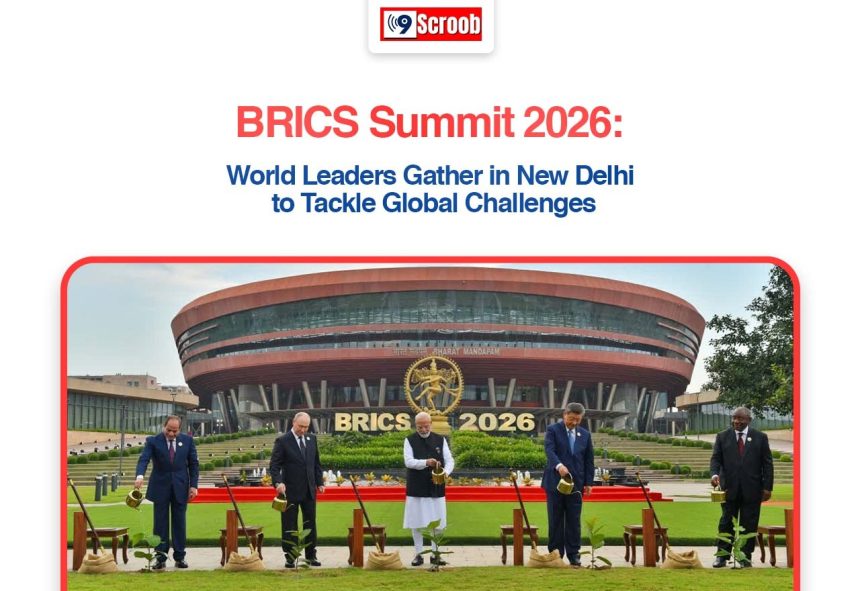
New Delhi has been the centre of global attention this week as leaders from BRICS nations came together for the 2026 summit, a meeting that arrives at a tricky moment, with wars, trade tensions, and economic uncertainty putting pressure on countries everywhere.
For India, hosting the summit is a chance to raise its profile in global diplomacy while pulling together a diverse group of emerging economies to talk through security, trade, technology, and development.
What Exactly Is the BRICS Summit?
BRICS brings together some of the world’s major emerging economies with the goal of deepening cooperation on trade, investment, finance, and international relations. Over the past few years, the group has grown well beyond its founding members, which makes the summit a bigger and more important platform — but also a harder one to navigate, since more countries at the table means more competing interests and priorities to balance.
Global Conflicts Take Over the Conversation
It’s no surprise that ongoing conflicts around the world dominated much of the discussion in New Delhi. Leaders pushed for restraint and renewed diplomatic efforts to ease tensions in the Middle East, while the war in Ukraine and other geopolitical flashpoints also stayed firmly on the agenda.
These conversations reflect a wider anxiety shared by many countries right now — over security, energy supplies, and the economic toll that ongoing conflicts keep taking.
Trade and the Global Economy
Economic cooperation was another major theme at the summit. BRICS countries are looking to tighten trade and investment links with one another while trying to shield themselves from some of the risks created by global instability — things like tariffs, shaky supply chains, and how much say developing economies actually get in global financial institutions.
For India, stronger ties within BRICS could translate into real opportunities for more trade, investment, and economic collaboration down the line.
Technology and AI Move Up the Agenda
Technology, and AI in particular, has become a bigger and bigger part of what BRICS talks about. As artificial intelligence and digital tools reshape economies everywhere, developing nations are trying to work out how to actually benefit from these changes, while also dealing with legitimate concerns around access, security, and responsible use. India, given how much it’s leaning into digital growth itself, has pushed hard for these conversations to get more attention.
The New Delhi Declaration
One of the summit’s biggest outcomes was the New Delhi Declaration — a joint statement that laid out where the group stands on global conflicts, terrorism, economic cooperation, and reform of international institutions. It also made the case for giving developing and emerging economies a louder voice in how global decisions get made.
Why This Matters for India
Hosting BRICS gives India a meaningful platform on the world stage. The country has been pushing for a bigger role in conversations around global economic governance, technology, climate action, and international security, and this summit lets it engage directly with other major emerging economies while positioning itself as a leading voice for the developing world.
It’s also a reflection of something bigger: India’s growing diplomatic weight as the global balance of power keeps shifting.
What Happens Next
The real challenge for BRICS now is turning all this talk into actual, practical cooperation. Member countries don’t always agree, but there’s still plenty of common ground to work with — trade, technology, energy, climate change, and development all offer room to collaborate.
For India, this summit isn’t just another diplomatic event to check off. It’s a chance to help shape conversations that could end up influencing the global economy and international relations for years to come.