

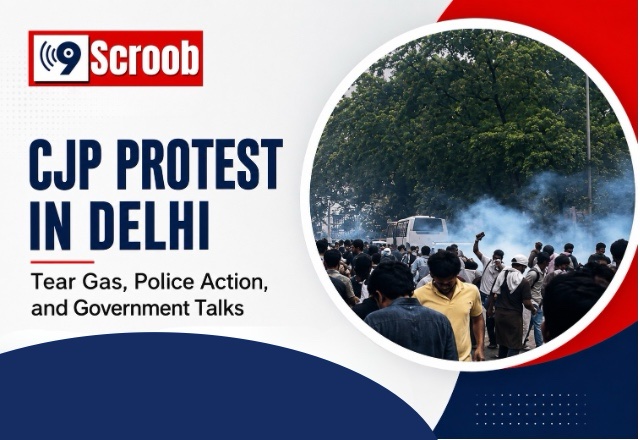
New Delhi, July 21, 2026 — Monday saw thousands of Cockroach Janta Party (CJP) supporters march toward Parliament as part of their nationwide “Sansad Chalo” protest, demanding accountability over alleged examination irregularities and calling for Union Education Minister Dharmendra Pradhan’s resignation. It turned out to be one of the largest youth-led protests in recent months, and it didn’t stay peaceful for long. Once protesters tried pushing past restricted areas near Parliament, things escalated into clashes with Delhi Police.
Thousands Show Up at Jantar Mantar
The day started early at Jantar Mantar, where supporters from Delhi and several other states had gathered before the march even began. A lot of them had reportedly been there overnight, banners in hand, chanting for education reform and government accountability.
Delhi Police, clearly expecting a big turnout, had already deployed heavy security across central Delhi and put up barricades around Parliament Street, Shastri Bhawan, and other nearby areas to keep the crowd out of high-security zones.
Then the Clashes Started
Tensions rose when groups of protesters tried to cross those barricades on their way toward Parliament. According to Delhi Police, the crowd turned “unruly, aggressive and violent,” which is when officers stepped in. Tear gas and baton charges followed at several spots as police worked to disperse people after the alleged attempt to breach security lines.
Protest leaders tell it differently — they say the police used excessive force on what they call a peaceful demonstration. And the videos from the ground back up how chaotic it got: people running from tear gas, security personnel pushing the crowd back from the restricted zones.
Injuries on Both Sides
Both protesters and police ended up hurt in the confrontation. Delhi Police say more than 100 of their personnel — including senior officers — were injured while trying to control the crowd. Several protesters also needed medical treatment. Police have since filed an FIR and detained dozens of people in connection with the violence.
Government Opens Talks with CJP
As things heated up on the streets, the Centre made its first move toward dialogue. Union Health Minister J.P. Nadda met with a CJP delegation, who laid out three main demands: Pradhan’s resignation, the release of activist Sonam Wangchuk, and compensation for the families affected by the alleged examination scandal.
After the meeting, Nadda said the government would look into the demands and asked protesters to end their sit-in peacefully. CJP leaders, though, weren’t convinced — they said talks had started, but no actual commitments had been made yet.
The Protest Isn’t Over
Even with the meeting happening, the sit-in at Jantar Mantar kept going. CJP leaders say they’ll keep the movement alive until their demands are met, though they’ve said future protests will lean more toward peaceful demonstrations rather than another big march.
Sonam Wangchuk, whose hunger strike has become something of a symbol for the whole movement, kept up his fast despite calls to stop. His involvement has drawn a lot of public attention and pulled in more support for the cause.
Security Still Tight
After Monday’s violence, Delhi Police have kept security elevated across central Delhi, especially around Parliament, Jantar Mantar, and other sensitive government spots. Traffic restrictions are still in place, and authorities are asking people to avoid unnecessary travel through the area.
This protest has become one of the biggest of the year, shining a light on growing frustration among students and young people over exam transparency and the push for education reform. With talks between the government and CJP now underway, all eyes are on whether this leads to a peaceful resolution in the days ahead.