

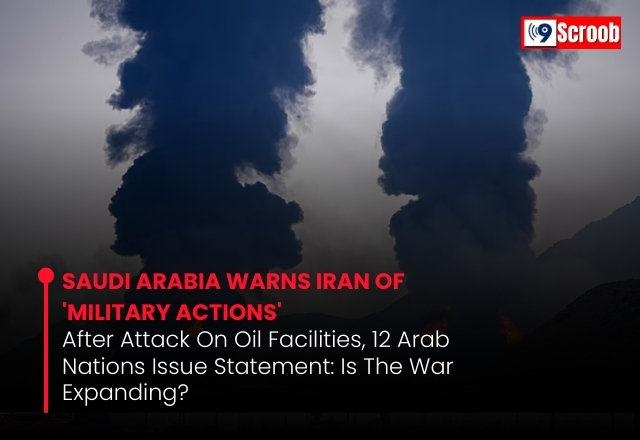
As the conflict involving Iran entered its 20th day with no signs of de-escalation, tensions across the Middle East have intensified. Gulf countries, which find themselves directly affected by the ongoing situation, have urged Iran to immediately halt its attacks.
On March 19, foreign ministers from 12 Arab and Islamic nations issued a joint statement calling on Iran to respect international law and stop targeting civilian infrastructure. At the same time, Saudi Arabia made it clear that it reserves the right to take military action if required to protect its territory and resources.
12 Nations Unite, Call for Immediate End to Attacks
The joint statement was issued by representatives from Azerbaijan, Bahrain, Egypt, Jordan, Kuwait, Lebanon, Pakistan, Qatar, Saudi Arabia, Syria, Turkey, and the United Arab Emirates.
The statement accused Iran of carrying out attacks on residential areas and critical infrastructure, including oil facilities, desalination plants, airports, and diplomatic premises. These developments have raised serious concerns about the safety of civilians and the stability of the region.
Gulf nations emphasized the importance of adhering to international laws and avoiding further escalation that could lead to a wider regional conflict.
Saudi Arabia Signals Strong Response
Saudi Foreign Minister Prince Faisal bin Farhan strongly criticized Iran’s actions, stating that recent attacks, including those targeting Riyadh during ongoing diplomatic meetings, were not coincidental.
He said that Iran is attempting to pressure its neighboring countries rather than engage in meaningful dialogue. According to him, such actions will not succeed and could ultimately backfire.
Saudi Arabia reiterated that it will not hesitate to defend its sovereignty and economic interests. The country has reserved the right to take military action if the situation demands it.
Iran’s Position and Regional Impact
Iran has stated that its actions are in response to attacks on its own territory, allegedly carried out by Israel and the United States. Tehran has also warned that any attacks launched from Gulf nations will be treated as actions originating from American territory.
This stance has significantly increased tensions in the region, putting several Gulf countries at risk of being drawn further into the conflict.
US Response and Warning Over Qatar
US President Donald Trump has distanced the United States from Israel’s reported attack on Iran’s South Pars Gas Field. He indicated that such actions would not continue.
However, he issued a strong warning regarding Qatar. Trump stated that if Iran targets Qatar again, the United States could respond with overwhelming force, including potential action against the South Pars Gas Field.
He also emphasized the need for Iran to carefully assess responsibility before carrying out retaliatory strikes.
Growing Concerns Over Regional Stability
With multiple countries involved and strong statements being issued from all sides, concerns are rising about a broader conflict in the Middle East. The involvement of key global and regional powers has made the situation more complex and unpredictable.
The joint call for restraint highlights the urgency of diplomatic efforts to prevent further escalation and maintain stability in the region.
Disclaimer
Due to the rapidly evolving nature of the conflict, several claims and counterclaims are being made by different parties. Not all statements can be independently verified, and readers are advised to follow official updates and verified sources for the latest information.